

Cybersecurity Is No Longer Just an IT Responsibility.
In recent years, the acceleration of industrial digitalization has led manufacturers to increasingly connect production data with enterprise systems such as Manufacturing Execution Systems (MES), Enterprise Resource Planning (ERP), data analytics platforms and cloud-based services. While greater connectivity enables higher operational efficiency, improved visibility and data-driven decision-making, it also expands the cyber attack surface and increases the need for robust industrial cybersecurity.
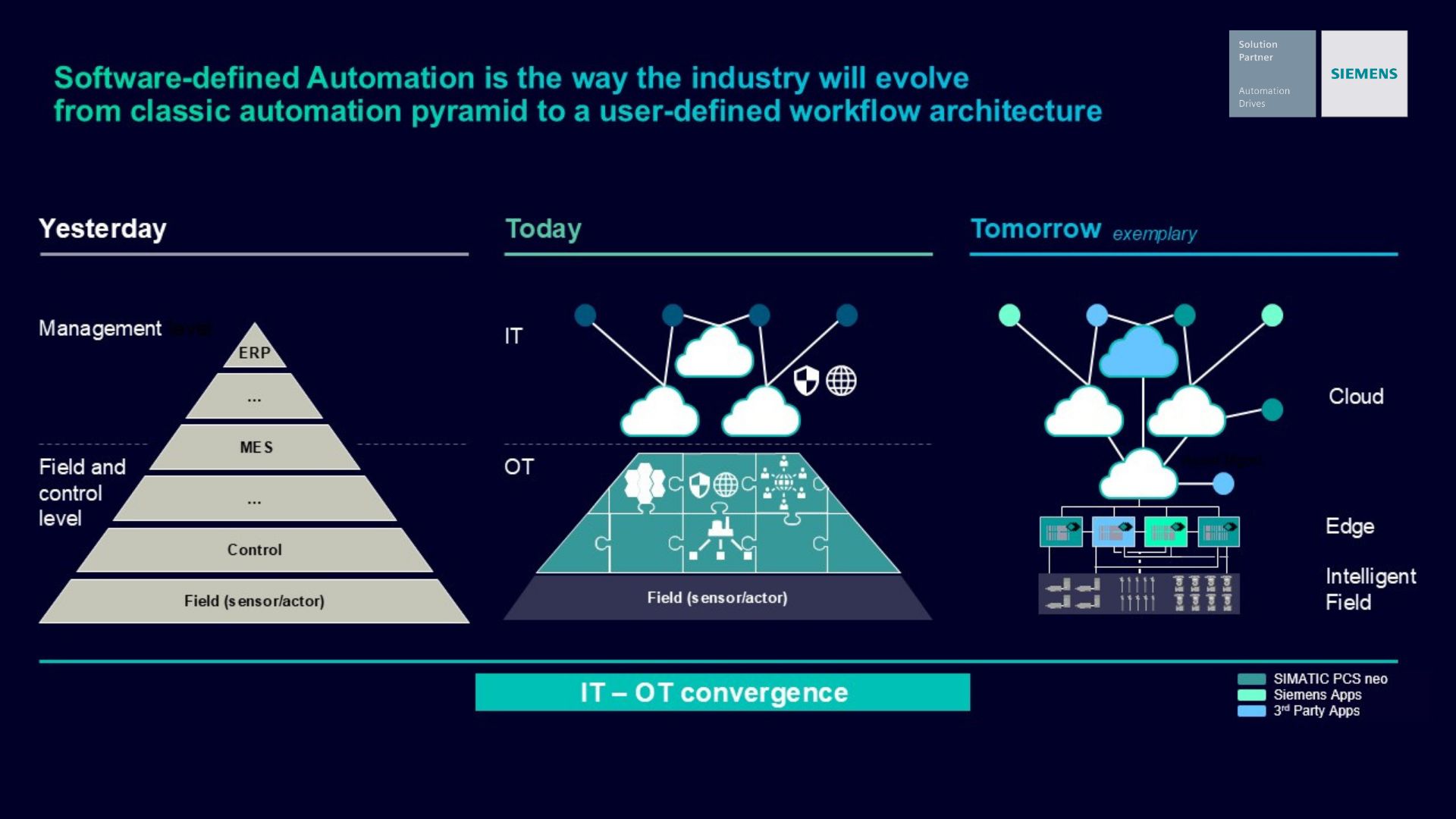
Traditionally, many Operational Technology (OT) environments were designed as isolated systems, with limited connectivity to Information Technology (IT) networks in order to maximize reliability and operational availability. Today, however, the convergence of IT and OT has become a key enabler of digital transformation and smart manufacturing. As industrial systems become more connected, cybersecurity is no longer optional—it is a fundamental requirement for protecting operational continuity, critical assets and business resilience.
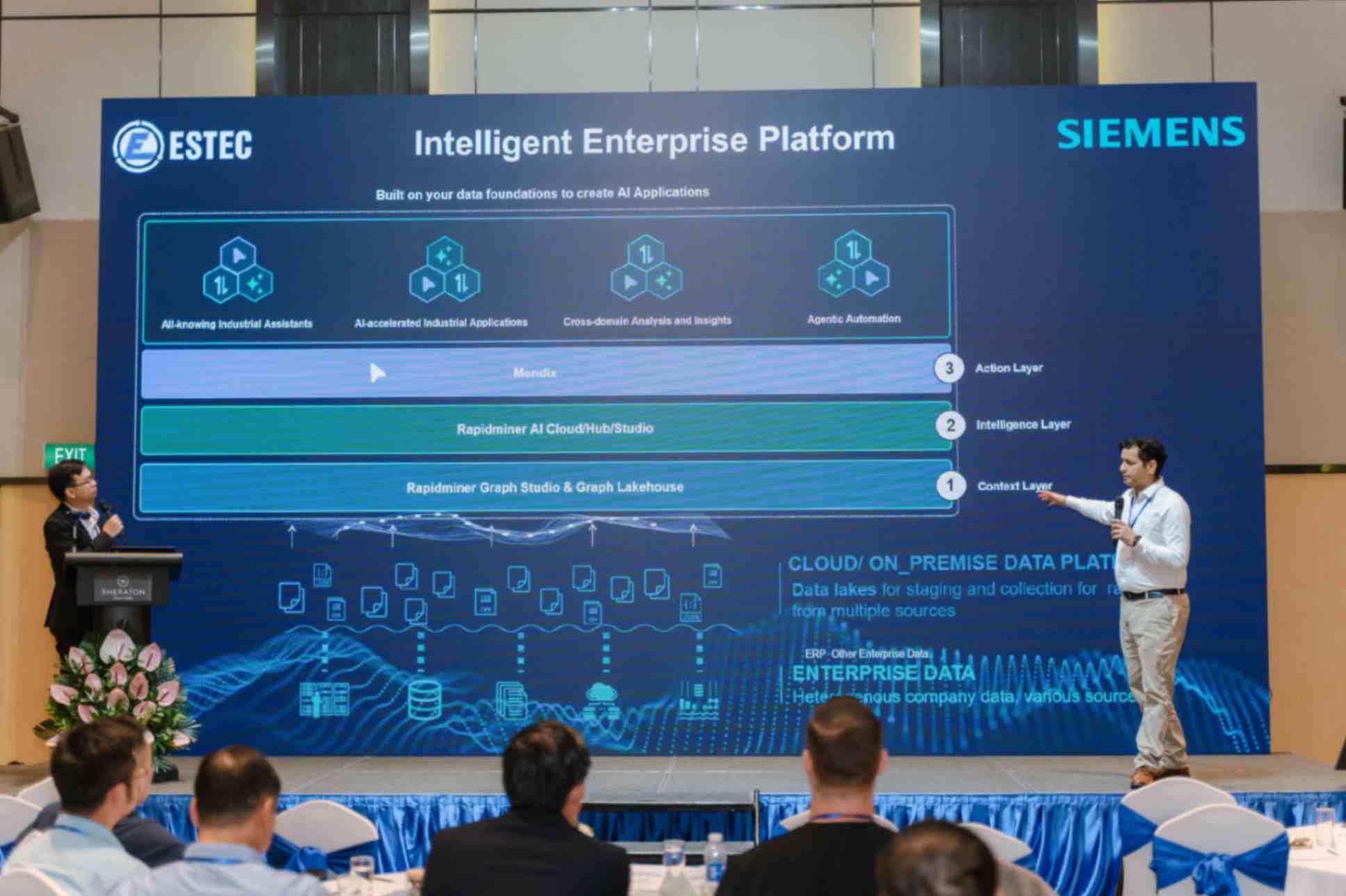
This topic was also highlighted in the session “Industrial Cybersecurity for Process Plant” at the seminar “Process Automation in the Digital Era – Shaping the Future of Process & Power Industries,” co-organized by ESTEC and Siemens.
During the session, Mr. Felix Stusii – Portfolio Sales at Siemens, and Mr. Nguyễn Viết Đức Duy – Head of Electrical, Automation & Instrumentation Solutions at ESTEC, shared their insights into cybersecurity challenges in OT environments, along with practical approaches to help businesses protect operational systems while ensuring production continuity.
Why Is OT Cybersecurity More Important Than Ever?
Unlike Information Technology (IT) systems, the primary objective of Operational Technology (OT) is to ensure the availability, safety, and continuity of industrial operations. Even a minor incident affecting control systems can lead to:
• Production line downtime.
• Supply chain disruptions.
• Reduced production output.
• Increased operational and maintenance costs.
• Risks to the safety of personnel and equipment.
For industrial organizations, OT cybersecurity is no longer simply an IT or cybersecurity issue. It has become a fundamental business requirement for maintaining operational resilience, safeguarding critical infrastructure and ensuring business continuity in an increasingly connected industrial environment.
Three Key Challenges in Industrial Cybersecurity
1. Legacy OT Systems
Many industrial facilities continue to operate legacy OT assets, including PLCs, DCS, HMIs and SCADA systems that have been in service for 10 to 20 years or more.
These systems were originally designed with a strong emphasis on availability, reliability and operational safety, rather than protection against today's rapidly evolving cyber threat landscape.
As industrial organizations increasingly connect legacy OT environments to enterprise networks and cloud-based applications to support digitalization initiatives, the potential attack surface expands significantly. Without appropriate cybersecurity measures, existing vulnerabilities may be exposed and exploited, increasing the risk of operational disruption and unplanned downtime.
2. The Increasing Convergence Between IT and OT
The development of Smart Factories requires production data from industrial plants to be increasingly connected and shared with enterprise systems such as ERP, MES, cloud platforms, and AI-based applications.
This connectivity enables significant benefits in terms of operational management, data-driven decision-making, and production optimization. However, if not properly designed and secured, these connections can also become potential entry points for cyberattacks.
Therefore, companies need to establish a secure and resilient architecture that enables seamless data exchange while maintaining an appropriate level of cybersecurity protection for Operational Technology (OT) systems.
.jpg)
3. Increasing Cyber Threats
The growing number of cyber threats, including ransomware attacks, unauthorized access, and unmanaged vulnerabilities, requires companies to implement more proactive approaches to cybersecurity monitoring, threat detection, and security management.
.jpg)
Where Should Companies Begin?
Defense-in-Depth - Layered Approach to Industrial Cybersecurity
One of the key takeaways from the seminar was that no single technology or security solution can fully protect an industrial environment. As cyber threats continue to evolve, organizations need a holistic cybersecurity strategy that safeguards critical assets across every layer of the industrial infrastructure.
A Defense-in-Depth approach provides this protection by implementing multiple, complementary security measures that work together to strengthen cyber resilience.
Key elements include:
- Assessing the current cybersecurity status and risks.
- Segmenting industrial networks.
- Controlling user and device access.
- Monitoring systems and detecting anomalies.
- Updating and managing OT assets.
- Establishing incident response processes.
.jpg)
Implementing a comprehensive set of security layers helps reduce risks and enhance resilience against increasingly sophisticated cyber threats.
Investing in Industrial Cybersecurity does not necessarily mean replacing the entire existing infrastructure. In many cases, organizations can start by assessing the security level of their existing OT environment, identifying potential vulnerabilities, and developing a suitable improvement roadmap aligned with operational requirements and investment budgets.
A well-defined cybersecurity strategy enables organizations to protect their production systems while optimizing long-term investment effectiveness.
.jpg)
Conclusion
As industrial plants become increasingly digitalized and connected, Industrial Cybersecurity is no longer solely an IT responsibility. It has become an essential part of an organization’s operational strategy to ensure secure, reliable, and resilient industrial operations.
Leveraging extensive experience in industrial automation, digitalization and OT infrastructure, ESTEC, in collaboration with Siemens, is committed to helping manufacturers assess their cybersecurity posture, design secure OT architectures and implement fit-for-purpose cybersecurity solutions tailored to each stage of their digital transformation journey.
Seminar Article Series
This is the second article in a series of four articles highlighting key insights and topics from the seminar “Process Automation in the Digital Era – Shaping the Future of Process & Power Industries,” co-organized by ESTEC and Siemens.
The series includes:
- ✅ Topic 1: Shaping the Future of Process Automation
- ✅ Topic 2: Industrial Cybersecurity for Process Plant (Current article)
- 🔜 Topic 3: Digital Twin for Smarter Plant Operations
- 🔜 Topic 4: AI-Driven Predictive Maintenance for Power
Stay tuned for Topic 3, where ESTEC will explore how Digital Twin solutions empower businesses to simulate real-world operations, predict future scenarios, and unlock smarter decision-making capabilities in their Smart Factory transformation journey.